Lifestyle

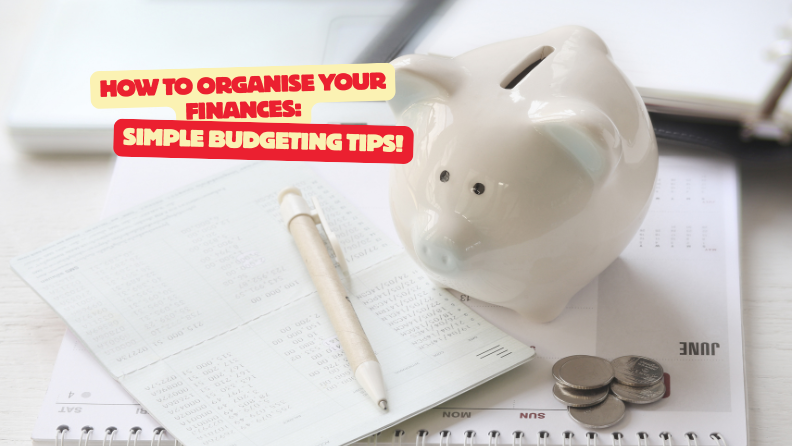
How to Organise Your Finances: Simple Budgeting Tips

today13 October 2026 16

Background
share close
Have you ever checked your bank account and wondered where your money went and why your finances look like they need a kiss of life?
 
Payday comes, and you fall into the same old habits: go shopping, get a takeaway, grab a coffee or, in my case, a hot chocolate, shop online, and suddenly the next payday cannot come soon enough.
 
Let me tell you, you are not alone; managing money can be overwhelming, and much of that is because most of us were never taught it growing up, not at home and certainly not in school. As children, our parents handle the money; as adults, we are left to wing it. Some people live paycheck to paycheck, others live above their means, some live on a shoestring budget, and others likely overspend comfortably. With everyday expenses and the cost of living getting astronomical, it can often feel like the elephant in the room.
Something I  have personally been working on this year is taking control of my finances. I’ve tried and tested various ways to get financially organised, and I’ve realised you don’t need an overcomplicated spreadsheet and you don’t need to give up every single treat or spend every hour checking your banking app.
​
Sometimes the best way to get control of your finances is to make a few small changes to help you understand exactly where your money goes and what you can do differently.
 
That’s exactly what we’re exploring in October’s Financial Reset series on The Friday Reset.
 
So, let’s get started.
How to Organise Your Finances Simple Budgeting Tips - go explore radio

Budgeting for Real People

Let’s be honest here, budgeting doesn’t necessarily have the best reputation. For some people, it can feel restrictive, boring and about as exciting as watching paint dry.
​
But it’s important to understand and move past the mindset that budgeting is a punishment. One way to look at it is as a way to make your money work for you.
​
Instead of wondering whether you can afford something, you’ll have a clearer idea of what funds are available after you cover your essential expenses.
​
Here’s where I would start: first, I’d work out how much money comes into my household each month. Then I would list my regular expenses;
  • Rent or mortgage payments.
  • Council tax and household bills.
  • Food shopping.
  • Travel and transport.
  • Phone and broadband.
  • Insurance and debt repayments.
  • Subscriptions and memberships.
  • Socialising and other personal spending.
 
Then I would look at expenses that only occasionally happen, such as birthdays, Christmas, Easter, car or household repairs, and annual renewals. Because these can catch you out if you’re only planning for monthly bills.
​
Once you have a clearer idea of what is coming in and what is coming out of your account, you can see how much disposable cash you have. Remember, your budget needs to work for your real life. There’s no point creating a plan that looks perfect on paper but is impossible to follow in reality, because you’ll struggle, give up, and feel even more overwhelmed.

Simple ways to save money every week

Saving money doesn’t have to mean saving a huge amount. If you can only set aside a small amount, that’s a good starting point. The important thing is to choose an amount you can manage financially.
​
Here are a few ideas for saving money

Plan your meals

Check your cupboards, freezer and fridge before shopping. Planning a few meals around what you already have can reduce waste and unnecessary purchases. If you’re not sure what to do with what you have, apps and even Google, ChatGPT, and Claude can give you recipes to use what you have.

Make a shopping list

It might sound obvious, but many people don’t do this, and a list can help you focus on what you actually need rather than what catches your eye. You can write your list on paper or in your phone’s notes. Some of my family members are terrible at not having a shopping list, and I have been encouraging them to use one; the not-so-stubborn ones are seeing the difference.

Review your subscriptions

Are you paying for streaming services, apps, memberships you rarely use? Check what you genuinely need and cancel anything you no longer want. I pick 1-2 streaming services I want to watch that month. Once I am done, if another streaming platform has a show I want to watch, I cancel the ones I have watched and get the other one.
​

Make use of what you own

Before buying something new, check whether you already have something that does the job and still works.
​

Set a weekly savings target

Forget the penny challenge, where it goes up daily; it becomes impossible for some people to keep up. Instead, set a weekly target of £1, £2, £5, £10, or another amount that suits your circumstances. If you can, move it into a separate savings pot so it’s easier to track, or into a separate bank account you use only for savings.
Remember, you don’t have to try every money-saving tip at once. Start with one or two and see what makes a difference; not every challenge or tip will fit your circumstances.

Financial Habits that can reduce your stress

Money worries can cause a domino effect that can lead to stress, depression and even isolation that can spiral out into other aspects of your life, such as your sleep, focus, work and daily relationships. It’s important to understand that money worries aren’t always caused by a lack of financial knowledge; they can also come from avoiding your finances and not knowing what is going on.
​
A few simple habits can really help make your financial situation more manageable.
​

15 minutes a week

Set aside 15 minutes a week for a money check-in: check your balance, review upcoming bills, and plan for anything you need.
​

Set Reminders

If you have bills due on different dates, use a calendar or reminders so you know what’s coming, check with the companies that you pay your bills to will change the payment date to a date that works for you (please not all companies will do this and once its done its set to that date for a few months).
​

Organise your finances

You could also organise your finances into categories, such as household essentials, everyday spending, savings, emergency fund and occasional expenses. If your bank offers spending categories or budgeting tools, these may help you understand your habits.
​
Remember, checking your finances doesn’t mean criticising or shaming yourself for every purchase. The purpose is to understand your situation better and make more informed decisions, not to feel guilty about buying a coffee or meeting a friend for lunch.
​
If money worries are affecting your wellbeing, or you are struggling with debts or essential bills, consider seeking free, impartial support rather than trying to manage everything alone.
​

Try our Autumn Budget Reset Challenge

If you have gotten this far into the article, I think you are ready to put some of these habits into practice.
​
Here’s your challenge for this week.

Step One

Write down your monthly income and regular expenses.

Step Two

Identify three areas where you could reduce unnecessary spending.

Step Three

Choose a realistic amount to save, even if it’s small.

Step Four

Review one subscription, bill or regular payment to see whether it still offers value.

Step Five

Schedule your next 15-minute money check for the following week.
​
You don’t need to overhaul your entire life in one day. The aim is to take a few manageable steps towards feeling more in control. If you do take this challenge, let us know how you get on in the comments below.
​

Your Money Reset Starts Here

Organising your finances isn’t about becoming perfect with money; retraining your brain to build good money habits takes time. It’s about understanding your spending, planning for what matters, and making choices that suit your circumstances.
 
Start small, keep things realistic and give yourself time to build better habits.
 
And if your first budget doesn’t work, adjust it to what works for you. A budget is a tool, not a test you can fail. Because a better relationship with your money starts with small steps.
Author Lisa Legend

Meet our writer, Lisa Legend

Lisa Legend is a London-based broadcaster, travel creator and the founder of Go Explore Radio. As a presenter, she brings energy and personality to popular shows including The Pool Party Travel Show, The Pool Party Club Classics, and The Friday Reset, blending great music with inspiring conversations around travel, lifestyle and modern living.

Alongside her work on air, Lisa is one of our main featured writers, sharing her genuine passion for travel, food and entertainment, with a sprinkle of business and lifestyle content for good measure. Her writing is engaging, relatable and rooted in real experiences, whether she’s uncovering hidden destinations, spotlighting foodie finds, or exploring trends that help listeners and readers reset, refocus and explore more.

You can read more of Lisa’s travel stories, guides and features at
www.oneepicroadtrip.com

Written by: GO EXPLORE RADIO

Rate it

Post comments (0)

Leave a reply

Your email address will not be published. Required fields are marked *